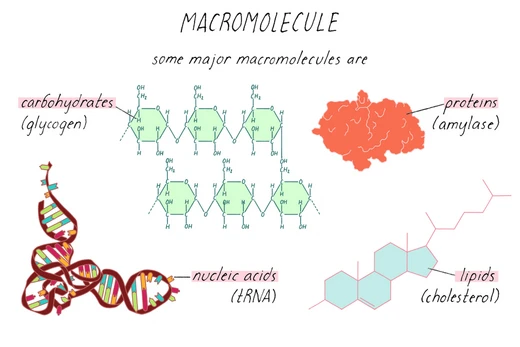
Monomer
A molecule that bonds to form polymers.

A monomer is a molecule that can react together with other monomer molecules to form a larger polymer chain or two- or three-dimensional network in a process called polymerization. Monomers are classified by type—natural vs synthetic, polar vs nonpolar, cyclic vs linear—and by the type of polymer they form, either through condensation polymerization or addition polymerization. The polymerization of one kind of monomer yields a homopolymer, while many polymers are copolymers derived from two different monomers.
- classification_by_type
- natural vs synthetic, polar vs nonpolar, cyclic vs linear
- classification_by_polymer_type
- condensation polymerization, addition polymerization
- common_natural_monomers
- amino acids, nucleotides, monosaccharides, isoprene
- common_synthetic_monomers
- ethylene, tetrafluoroethylene, vinyl chloride, styrene, epoxides, BPA, terephthalic acid, dimethylsilicon dichloride, ethyl methacrylate
- polymer_types_formed
- homopolymer, copolymer
Lore & Background
Monomers are the building blocks of polymers, with natural examples including amino acids for proteins, nucleotides for DNA and RNA, monosaccharides like glucose for cellulose and starch, and isoprene for natural rubber. Synthetic monomers include ethylene gas for polyethylene, tetrafluoroethylene for Teflon, vinyl chloride for PVC, and styrene for polystyrene. Epoxide monomers can cross-link to form epoxy, and BPA is the monomer precursor for polycarbonate. Terephthalic acid, combined with ethylene glycol, forms polyethylene terephthalate, while dimethylsilicon dichloride yields polydimethylsiloxane upon hydrolysis. Ethyl methacrylate is an acrylic monomer used in artificial nail extensions.
Reader's Guide
Monomers are fundamental to polymer chemistry, enabling the creation of both natural and synthetic materials that underpin modern life. Natural monomers such as amino acids, nucleotides, and monosaccharides form the biopolymers essential to biology—proteins, nucleic acids, and carbohydrates. Synthetic monomers like ethylene, vinyl chloride, and styrene produce ubiquitous plastics and rubbers. The distinction between condensation and addition polymerization dictates the stoichiometry and structure of the resulting polymers. For condensation polymerizations, comonomer ratios are often 1:1, as in nylons, while addition polymerizations typically use small percentages of comonomers, such as 1-octene with ethylene for specialized polyethylene. This versatility allows monomers to be tailored for specific properties, from Teflon's non-stick surface to the strength of polycarbonate. The term 'monomeric protein' also describes a single protein within a multiprotein complex, highlighting the concept's broader biological relevance.
Did You Know?
- The most abundant natural monomer is glucose, which forms cellulose, starch, and glycogen.
- Isoprene polymerizes to form natural rubber, most often cis-1,4-polyisoprene.
- Four types of nucleotide monomers are precursors to DNA, and four different ones are precursors to RNA.
- Small amounts of 1-octene monomer are copolymerized with ethylene to give specialized polyethylene.
Frequently Asked Questions
Who is Monomer?
A monomer is a single small molecule capable of chemically bonding with identical or different monomer molecules to build a much larger polymer chain or a two- and three-dimensional network. It serves as the fundamental building block from which all polymeric materials are constructed.
What are Monomer's powers/role?
Monomers drive the process of polymerization, linking together through either condensation or addition mechanisms to create extended macromolecular structures. A single type of monomer yields a homopolymer, while combining two distinct monomer species produces a copolymer.
How does Monomer's story end?
Once a monomer has undergone polymerization, it loses its independent molecular identity and becomes one repeating unit embedded within the larger polymer backbone. Its original reactive sites—such as a carbon–carbon double bond or a functional group—have been consumed in forming the new covalent linkages that hold the chain together.
Why is Monomer important?
Without monomers, none of the vast family of natural and synthetic polymers—proteins, nucleic acids, cellulose, plastics, silicones—could exist. They are the essential starting units whose specific chemical structure ultimately dictates the properties of the final macromolecule.
What are Monomer's known variants?
Monomers are categorized along several axes: natural versus synthetic origin, polar versus nonpolar character, and cyclic versus linear geometry. Common natural examples include amino acids, nucleotides, monosaccharides, and isoprene, while synthetic counterparts range from ethylene and styrene to BPA and dimethylsilicon dichloride.
More in Polymers And Macromolecules 1-24
Elsewhere in the Polymers And Macromolecules universe
Spotted an error? Know more?
This is a living reference — every entry is fact-audited, and reader corrections feed straight into our audit queue. Suggest an edit · See this site's audit record