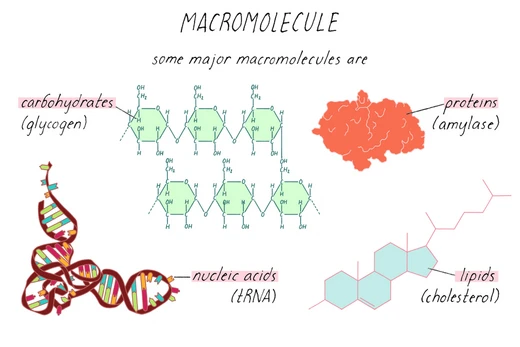
Polymer chemistry
Sub-discipline of chemistry focusing on polymers and macromolecules.

Polymer chemistry is a sub-discipline of chemistry that focuses on the structures, chemical synthesis, and chemical and physical properties of polymers and macromolecules. The principles and methods used within polymer chemistry are also applicable through a wide range of other chemistry sub-disciplines like organic chemistry, analytical chemistry, and physical chemistry. Many materials have polymeric structures, from fully inorganic metals and ceramics to DNA and other biological molecules. However, polymer chemistry is typically related to synthetic and organic compositions. Synthetic polymers are ubiquitous in commercial materials and products in everyday use, such as plastics and rubbers, and are major components of composite materials. Polymer chemistry can also be included in the broader fields of polymer science or even nanotechnology, both of which can be described as encompassing polymer physics and polymer engineering.
- field
- Chemistry
- known_for
- Study of polymers and macromolecules, including synthesis, properties, and applications
Lore & Background
Dissolved in ether or acetone, it becomes collodion, used as a wound dressing since the U.S. Civil War. The chemist Hermann Staudinger first proposed that polymers consisted of long chains of atoms held together by covalent bonds, which he called macromolecules. His work expanded the chemical understanding of polymers and was followed by an expansion of the field of polymer chemistry during which such polymeric materials as neoprene, nylon and polyester were invented. Before Staudinger, polymers were thought to be clusters of small molecules (colloids), without definite molecular weights, held together by an unknown force. Karl Ziegler and Giulio Natta received a Nobel Prize for their discovery of catalysts for the polymerization of alkenes. Alan J. Polyacetylene itself did not find practical applications, but organic light-emitting diodes (OLEDs) emerged as one application of conducting polymers. Teaching and research programs in polymer chemistry were introduced in the 1940s.
Reader's Guide
Polymer chemistry is significant as the discipline that explains and enables the creation of synthetic polymers, which are ubiquitous in commercial materials and products such as plastics, rubbers, and composite materials. Its history includes key discoveries like vulcanization, Bakelite, nylon, and Kevlar, and theoretical breakthroughs by Staudinger, Flory, and others that established polymers as long-chain macromolecules. The field's legacy includes Nobel Prizes awarded to Staudinger, Flory, Ziegler and Natta, and Heeger, MacDiarmid, and Shirakawa. Polymer chemistry also underpins the broader fields of polymer science and nanotechnology, and its principles apply across organic, analytical, and physical chemistry. The development of conductive polymers led to applications such as organic light-emitting diodes (OLEDs). Teaching and research programs in polymer chemistry were introduced in the 1940s, with institutes founded in Freiburg, Germany and Brooklyn, New York. The study of polymer thermodynamics helps improve material properties like toughening, impact resistance, biodegradability, and solubility. Polymers are classified by origin into biopolymers, synthetic polymers, and inorganic polymers, with synthetic polymers further divided into thermoplastics and thermosets.
Did You Know?
- Hermann Staudinger first proposed that polymers consist of long chains of atoms held together by covalent bonds, which he called macromolecules.
The Macromolecule Revolution
Before Hermann Staudinger's landmark proposal, the scientific community largely regarded polymers as amorphous clusters of small molecules—colloids lacking definite molecular weights, held together by some mysterious unknown force. Staudinger shattered this view by arguing that polymers were, in fact, long chains of atoms linked by covalent bonds, which he termed macromolecules. This single conceptual leap transformed how chemists understood materials ranging from rubber to biological molecules. In the wake of his work, the field of polymer chemistry expanded dramatically, giving rise to landmark materials like neoprene, nylon, and polyester. Teaching and research programs in polymer chemistry began appearing in universities throughout the 1940s, cementing the discipline as a distinct branch of chemistry.
A Constellation of Nobel Laureates
Polymer chemistry has produced an extraordinary lineage of Nobel-recognized breakthroughs. Karl Ziegler and Giulio Natta shared a Nobel Prize for discovering catalysts that enabled controlled polymerization of alkenes, opening new pathways for industrial plastic production. Heeger, Alan MacDiarmid, and Hideki Shirakawa received the Chemistry Nobel for developing polyacetylene and related conductive polymers; while polyacetylene itself never found a practical application, their work paved the way for organic light-emitting diodes. Together, these figures illustrate how polymer chemistry repeatedly intersects with materials science, electronics, and industrial engineering.
From Nitrocellulose to Bakelite: The Early Synthetic Era
The story of synthetic polymers begins long before modern laboratories. Treated with camphor, this compound produced celluloid; dissolved in ether or acetone, it became collodion, a wound dressing used during the U.S. Civil War.
Architecture of a Polymer: Structure and Quantitative Description
A polymer is a high molecular mass compound assembled through polymerization from simple reactive units called monomers. The resulting macromolecule can be characterized along numerous axes: its degree of polymerization, molar mass distribution, tacticity, copolymer distribution, degree of branching, end-groups, crosslinks, and crystallinity. Thermal behavior is captured by parameters such as the glass transition temperature and melting temperature. In solution, polymers exhibit distinctive solubility, viscosity, and gelation characteristics that set them apart from small molecules. Quantitatively, polymer chemists place particular emphasis on two average molecular weights: the number-average, calculated as the sum of each species' molar mass multiplied by its count, divided by the total count, and the weight-average, which weights each species by the square of its molar mass. The spread between these two values reveals the breadth of the molar mass distribution. Additives of monomers can be introduced to tune mechanical properties, processability, and durability, making the structural description a practical tool for material design rather than mere taxonomy.
Frequently Asked Questions
Who is Polymer chemistry?
Polymer chemistry is a specialized branch within the broader field of chemistry that zeroes in on how large molecular chains are built, made, and behave. It carves out its own territory by centering specifically on macromolecules rather than small-molecule reactions.
What are Polymer chemistry's powers or role?
Its core abilities involve designing new synthetic chains, understanding how molecular architecture dictates material behavior, and figuring out how to process those materials into useful products. It also borrows tools from organic, analytical, and physical chemistry to carry out its work.
How does Polymer chemistry's story end?
As a living academic discipline rather than a finite narrative, Polymer chemistry has no fixed ending; it keeps evolving as new monomers, catalysts, and characterization techniques are discovered. Its ongoing plot is driven by industrial demand and fundamental curiosity about how molecular-scale choices shape bulk material performance.
Why is Polymer chemistry important to the wider cast?
Nearly every material in daily life—from plastics and fibers to the DNA inside living cells—has some polymeric backbone, so understanding those chains is essential across engineering, medicine, and environmental science. It also acts as a bridge that links concepts from organic, physical, and analytical chemistry into practical applications.
What connections does Polymer chemistry share with other characters?
It frequently collaborates with organic chemistry for building-block reactions, with physical chemistry for the thermodynamics and kinetics of chain growth, and with analytical chemistry for characterizing final products. Its scope is broad enough to touch inorganic ceramics and biological macromolecules, though its home base remains synthetic and organic compositions.
More in Polymers And Macromolecules 1-24
Elsewhere in the Polymers And Macromolecules universe
Spotted an error? Know more?
This is a living reference — every entry is fact-audited, and reader corrections feed straight into our audit queue. Suggest an edit · See this site's audit record