Polymer
Large molecules of repeating subunits essential to life and industry.

A polymer is a substance or material consisting of very large molecules, or macromolecules, composed of many repeating subunits derived from one or more species of monomers. Due to their broad spectrum of properties, both synthetic and natural polymers play essential and ubiquitous roles in everyday life, ranging from familiar synthetic plastics such as polystyrene to natural biopolymers such as DNA and proteins fundamental to biological structure and function.
- field
- Polymer science, materials science, biophysics
- known_for
- Large molecules formed by repeating subunits (monomers); basis of plastics, biopolymers, and many everyday materials
Lore & Background
Polymers are studied in polymer science, biophysics, and materials science and engineering. Polymers are created via polymerization of many small molecules known as monomers. Their large molecular mass produces unique physical properties including toughness, high elasticity, viscoelasticity, and a tendency to form amorphous and semicrystalline structures. Historically, products arising from the linkage of repeating units by covalent chemical bonds have been the primary focus, though an emerging area focuses on supramolecular polymers formed by non-covalent links. Natural polymeric materials such as hemp, shellac, amber, wool, silk, and natural rubber have been used for centuries. Synthetic polymers include polyethylene, polypropylene, polystyrene, polyvinyl chloride, synthetic rubber, phenol formaldehyde resin (Bakelite), neoprene, nylon, and many more.
Reader's Guide
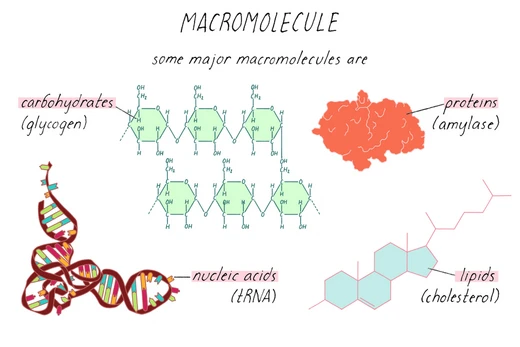
Polymers are fundamental to both biological and synthetic materials. In biological contexts, essentially all biological macromolecules—proteins (polyamides), nucleic acids (polynucleotides), and polysaccharides—are purely polymeric or composed largely of polymeric components. The study of polymers spans polymer chemistry, polymer physics, biophysics, and materials science. The distinction between natural and synthetic polymers is central, with natural examples including cellulose (the main constituent of wood and paper) and synthetic examples including polystyrene. Polymerization methods include step-growth and chain polymerization, with newer methods such as plasma polymerization not fitting neatly into either category. The microstructure of a polymer—the arrangement of monomers along the backbone—determines properties such as crystallinity and glass transition, which in turn affect physical and chemical behavior. The discovery of hemoglycin (previously termed hemolithin) as a space polymer in meteorites represents an emerging area of study.
Did You Know?
- Hemoglycin (previously termed hemolithin) is a space polymer that is the first polymer of amino acids found in meteorites.
- Polyisoprene of latex rubber is an example of a natural polymer, and polystyrene of styrofoam is an example of a synthetic polymer.
What Makes a Polymer a Polymer
A polymer is, at its core, a substance built from extraordinarily large molecules—macromolecules—assembled from countless repeating subunits that trace back to one or more types of monomers. This architectural principle, whether the result is a strand of DNA or a sheet of polystyrene, is what unites the entire family. The sheer scale of these molecular structures, far exceeding that of ordinary small-molecule compounds, is not merely a matter of size; it generates a distinctive set of physical behaviors. Polymers tend to exhibit toughness, high elasticity, and viscoelasticity—properties that give rubber its stretch and plastics their resilience. Rather than packing into neat crystalline lattices like many small molecules do, polymers more commonly form amorphous or semicrystalline structures, a consequence of their long, tangled chains. These characteristics are not incidental; they are the direct, predictable outcome of molecular mass and chain architecture, and they are precisely what make polymers so versatile across engineering, biology, and everyday materials.
A Name with Roots and a Concept That Evolved
The word polymer carries a Greek lineage: polus, meaning many or much, paired with meros, meaning part. For nearly a century, the scientific community lacked a unified framework for understanding how small molecules could link into vast chains. The following decade was consumed by Staudinger's effort to gather experimental evidence supporting his model, a process that ultimately reshaped the field. Today, polymer science—encompassing both polymer chemistry and polymer physics—remains the primary discipline for studying these covalently linked repeating-unit materials, while an emerging branch now turns its attention to supramolecular polymers held together not by covalent bonds but by non-covalent interactions, expanding the definition of what a polymer can be.
From Meteorites to Manufacturing
Polymers span an astonishing range of origins. On the natural side, materials like hemp, shellac, amber, wool, silk, and natural rubber have served human civilizations for centuries, while cellulose quietly forms the backbone of wood and paper. Even beyond Earth, the amino-acid polymer hemoglycin—once called hemolithin—has been identified in meteorites, marking the first polymeric amino-acid structure found in extraterrestrial material. In living organisms, virtually every biological macromolecule is polymeric: proteins are polyamides, nucleic acids are polynucleotides, and polysaccharides round out the trio. On the synthetic side, the list of industrially important polymers reads like a catalog of modern life: polyethylene, polypropylene, polystyrene, polyvinyl chloride, synthetic rubber, Bakelite, neoprene, nylon, polyacrylonitrile, PVB, and silicone, among others.
Building Chains: The Art of Polymerization
Creating a polymer means driving a process called polymerization, in which numerous small monomer molecules are joined into a covalently bonded chain or network. Depending on the chemistry, certain functional groups may be shed from each monomer during the reaction—as in the production of PET polyester, where terephthalic acid and ethylene glycol combine with the loss of two water molecules per repeat unit. Synthetic polymerization is broadly divided into two strategies. In chain polymerization, monomers attach to a growing chain one at a time, as seen in polystyrene production. In step-growth polymerization, partially formed chains can link directly with one another, the mechanism behind polyesters. Step-growth further splits into polycondensation, which releases a low-molar-mass by-product at each step, and polyaddition. In living cells, the analogous task is handled by enzymes: DNA polymerase catalyzes the assembly of nucleic acids, while a multi-step enzymatic cascade transcribes genetic information and translates it into specific proteins. Even natural polymers like rubber and cellulose can be chemically modified—vulcanized with sulfur or converted into nitrocellulose—bridging the gap between nature's raw materials and engineered performance.
Frequently Asked Questions
What is a Polymer?
A polymer is a giant molecule built by linking together many smaller building blocks called monomers in a repeating chain. This chain structure is what gives the material its distinctive physical and chemical character.
What are Polymer's key abilities or properties?
Because the identity of the repeating unit and the length of the chain can be tuned, polymers span an enormous range of behaviors—from soft and elastic to hard and heat-resistant. That versatility is what lets them serve roles in packaging, electronics, textiles, and more.
Where does Polymer show up in everyday life?
You interact with polymers constantly: the plastic bottle in your hand, the rubber sole on your shoe, and the synthetic fibers in your shirt are all examples. Engineered varieties like polyethylene and nylon are designed specifically for those familiar daily tasks.
How does Polymer connect to living organisms?
Cells depend on natural macromolecular chains—proteins, DNA, and cellulose—for structure, genetic information, and energy processing. Without these biopolymer backbones, biological function as we understand it would be impossible.
Why is Polymer considered so central to modern science and industry?
It sits at the intersection of chemistry, materials engineering, and biophysics, making it a unifying topic across several disciplines. Virtually every manufactured product and every living cell relies on macromolecular chains in some form, which is why the field remains so broadly influential.
More in Polymers And Macromolecules 1-24
Elsewhere in the Polymers And Macromolecules universe
Spotted an error? Know more?
This is a living reference — every entry is fact-audited, and reader corrections feed straight into our audit queue. Suggest an edit · See this site's audit record