Resin
Plant and synthetic substance used in varnishes, adhesives, and incense.
Resin is a thick liquid or solid that can be turned into a polymer. It can come from living things or be made synthetically, but it is most often collected from plants. Resins are blends of organic compounds that do not dissolve in water, and they are mostly made up of terpenes. People have used them for a very long time to make varnishes, adhesives, food coatings, incense, and perfumes. Resins should not be confused with gums, which are water-soluble polysaccharides, though the terms are sometimes used interchangeably in casual settings. Common examples include pine oleoresins, amber, hashish, frankincense, myrrh, and shellac, which comes from insects.
Plants produce resin to defend themselves. When a plant is injured, it secretes resin to repel herbivores, insects, and pathogens. The volatile compounds in resin can also attract beneficial insects that prey on the plant's attackers.
Most plant resins are built from terpenes. Specific components include α-pinene, β-pinene, 3-carene, sabinene, limonene, terpinolene, and smaller amounts of longifolene, caryophyllene, and cadinene. Some resins also contain a high amount of resin acids. Rosins are less volatile and consist mainly of diterpenes.
Many plant resins are well known. Amber is fossilized resin from conifers and other trees. Other examples include Balm of Gilead, balsam, Canada balsam, copal from *Protium copal* and *Hymenaea courbaril*, dammar gum from Dipterocarpaceae trees, dragon's blood from *Dracaena* species, elemi, frankincense from *Boswellia sacra*, galbanum from *Ferula gummosa*, gum guaicum from *Guaiacum* trees, kauri gum from *Agathis australis*, hashish from *Cannabis indica*, labdanum from *Cistus* species, mastic from *Pistacia lentiscus*, myrrh from *Commiphora* shrubs, sandarac from *Tetraclinis articulata*, styrax from *Styrax* species, and spinifex resin from Australian grasses. Copal, kauri gum, and dammar can also be found as subfossil deposits. Subfossil copal can be told apart from true amber because it becomes sticky when a drop of acetone or chloroform is placed on it. African copal and New Zealand kauri gum are also collected in a semi-fossil state.
Rosin is a solidified resin made by distilling away the volatile terpenes. It is a transparent or translucent mass with a vitreous fracture, faintly yellow or brown, and has little to no odor or taste. Rosin does not dissolve in water but does dissolve in alcohol, essential oils, ether, and hot fatty oils. It softens and melts when heated and burns with a bright, smoky flame. Rosin contains a complex mix of substances, including resin acids, which are oxidized terpenes. These acids dissolve in alkalis to form resin soaps, and can be recovered by adding acid. Examples of resin acids are abietic acid (also called sylvic acid), plicatic acid from cedar, and pimaric acid from galipot resin. Abietic acid can be extracted from rosin using hot alcohol. Rosin is obtained from pines and other conifers. Most plant resins are stem secretions, but in some Central and South American *Dalechampia* and *Clusia* species, they are produced as pollination rewards and used by stingless bees for nest building. Honey bees collect resins from poplars and conifers to make propolis, which they use to seal small gaps in their hives, while larger gaps are filled with beeswax.
Shellac is an example of an insect-derived resin. Asphaltite and Utah resin are petroleum bitumens.
People have used plant resins for a very long time. Their use was recorded in ancient Greece by Theophrastus, in ancient Rome by Pliny the Elder, and resins like frankincense and myrrh were highly valued in ancient Egypt. These were prized substances and required as incense in some religious rites. The word "resin" comes from French *resine*, from Latin *resina*, which either comes from or is related to the Greek *rhētínē* meaning "resin of the pine," of unknown earlier origin, probably non-Indo-European. In modern times, the word "resin" has been applied to nearly any liquid component that hardens into a lacquer or enamel-like finish, such as nail polish. Some casting resins and synthetic resins, like epoxy, are also called resin. Soft natural resins are known as oleoresins, and those containing benzoic or cinnamic acid are called balsams. Oleoresins are natural mixtures of an oil and a resin. Other natural resinous products are mixed with gum or mucilaginous substances and called gum resins. Several natural resins are used in perfumes, including balsams of Peru and tolu, elemi, styrax, and certain turpentines.
Other plant liquids like sap, latex, or mucilage are sometimes confused with resin but are different. Saps, for instance, serve a nutritive function that resins do not.
Plant resins are valued for making varnishes, adhesives, and food glazing agents. They are also raw materials for synthesizing other organic compounds and provide ingredients for incense and perfume.
- type
- Natural or synthetic substance
- composition
- Mixtures of organic compounds, predominantly terpenes
- common_sources
- Plants (e.g., pines, Boswellia sacra, Cannabis indica), insects (shellac), petroleum bitumens
- key_properties
- Insoluble in water, highly viscous liquid or solid, convertible into polymer
- historical_use
- Documented in ancient Greece by Theophrastus, in ancient Rome by Pliny the Elder, prized in ancient Egypt as frankincense and myrrh
Lore & Background
Resins protect plants from insects and pathogens and are secreted in response to injury. They repel herbivores, insects, and pathogens, while volatile phenolic compounds may attract benefactors such as predators of insects that attack the plant. Most plant resins are composed of terpenes, including α-pinene, β-pinene, limonene, and others; some also contain resin acids. Rosin is a solidified resin from which volatile terpenes have been removed by distillation, consisting of resin acids such as abietic acid and pimaric acid.
Reader's Guide
Resins have been valued by humans for millennia, with documented use in ancient Greece, Rome, and Egypt, particularly for frankincense and myrrh in religious rites. The oldest known use of plant resin comes from the late Middle Stone Age in Southern Africa, where it was used as an adhesive for hafting stone tools. Plant resins are used in varnishes, adhesives, food glazing agents, incense, and perfumes. Hard transparent resins like copals and dammars are used for varnishes, while softer oleo-resins like frankincense and myrrh are used for food and incense. Animal-derived resins such as shellac and lac have been used for sealing wax and lacquerware. Synthetic resins, including epoxy and alkyd resins, are produced via conversion to solids and used in paints, varnishes, and glues. The term 'resin' has been applied to nearly any liquid that sets into a hard lacquer or enamel-like finish, such as nail polish.
Did You Know?
- Resins protect plants from insects and pathogens and are secreted in response to injury.
- Amber is fossil resin from coniferous and other tree species.
- Rosin is obtained from pines and some other plants, mostly conifers.
- The word 'resin' comes from French resine, from Latin resina, which either derives from or is a cognate of the Greek ῥητίνη rhētínē 'resin of the pine'.
Origins of the Concept
The word polymer carries a straightforward Greek lineage: polus meaning many and meros meaning part, a fitting name for a molecule built from countless repeating fragments. Yet the term's history is far from simple. Staudinger then devoted the following decade to gathering the experimental evidence needed to convince his skeptical colleagues. Today, the study of these materials spans polymer chemistry, polymer physics, biophysics, and materials science and engineering, with a growing frontier in supramolecular polymers held together not by covalent bonds but by weaker, non-covalent interactions.
The Natural and Synthetic Spectrum
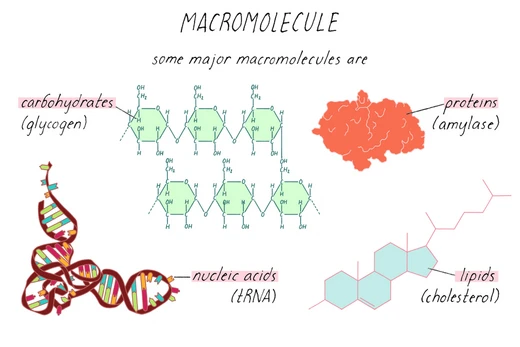
Polymers are everywhere in the material world, split broadly into those that nature assembles and those that human industry manufactures. On the natural side, materials like hemp, shellac, amber, wool, silk, and rubber have served civilizations for centuries, while cellulose quietly forms the backbone of wood and paper. Even space has yielded a polymeric surprise: hemoglycin, once called hemolithin, stands as the first polymer of amino acids ever identified inside meteorites. In biology, virtually every major macromolecule—proteins, nucleic acids, polysaccharides—is polymeric in nature. On the synthetic side, the global demand list reads like a household inventory: polyethylene, polypropylene, polystyrene, polyvinyl chloride, Bakelite, nylon, silicone, and dozens more. Most plastic backbones are carbon-based, though silicon gives rise to Silly Putty and plumbing sealants, and oxygen appears in the chains of polyethylene glycol, polysaccharides, and DNA.
The Art of Polymerization
At its core, polymerization is the act of stitching thousands of small monomer molecules into a single covalently bonded chain or network. The process is not always a simple concatenation. In making PET polyester, for instance, terephthalic acid and ethylene glycol join together while shedding two molecules of water per repeat unit, so the final polymer is not a literal sum of its parts. Synthetic routes fall into two broad families. Chain polymerization adds monomers to a growing chain one at a time, as in polystyrene production. Step-growth polymerization, by contrast, allows partially built chains to fuse with one another directly, as in polyester synthesis, and can be further split into polycondensation, which releases a small by-product at every step, and polyaddition. Newer techniques like plasma polymerization resist tidy classification. In living cells, entirely different machinery takes over: DNA polymerase catalyzes the copying of genetic material, and a cascade of enzyme-mediated steps transcribes and translates that information into functional proteins.
Structure, Properties, and Scientific Reach
What makes a polymer behave so differently from a small-molecule compound is, in large part, sheer scale. The enormous molecular mass relative to ordinary chemicals gives rise to a distinctive toolkit of physical properties: remarkable toughness, high elasticity, viscoelasticity, and a marked preference for forming amorphous or semicrystalline arrangements rather than well-ordered crystals. Describing a polymeric material's structure requires a hierarchy of length scales, stretching from the sub-nanometer level of individual bonds up to the macroscopic dimensions of a finished product, with each level providing the foundation for the next. This multi-scale complexity is why polymers sit at the intersection of several scientific disciplines. Polymer science encompasses both chemistry and physics, while biophysics and materials science and engineering each contribute their own analytical lenses. An emerging branch, supramolecular polymer chemistry, shifts the focus from covalent linkages to the weaker non-covalent interactions that can also assemble repeating units into functional macromolecular architectures.
Frequently Asked Questions
What exactly is a resin in polymer chemistry?
A resin is a highly viscous liquid or solid composed mainly of organic compounds, predominantly terpenes, that is insoluble in water and can be chemically converted into a polymer. It sits as a precursor stage before full polymerization is achieved.
Where do natural resins come from?
The most common natural sources are various plants such as pines, Boswellia sacra, and Cannabis indica, though resins can also be derived from insects (as in shellac) or petroleum bitumens. Synthetic resins are manufactured in laboratories and industrial settings.
What practical uses have resins had throughout history?
Humans have employed resins for varnishes, adhesives, food additives, incense, and perfumes since antiquity. Ancient Egyptians prized them as frankincense and myrrh, while Greek and Roman writers like Theophrastus and Pliny the Elder documented their properties and applications.
What key properties distinguish a resin from a finished polymer?
Resins are characterized by their high viscosity, water insolubility, and their ability to be further processed into a true polymer. In other words, a resin is a reactive or semi-reactive mixture that has not yet completed its cross-linking or curing step.
Are resins always natural products?
No. While many well-known resins are harvested from plants or insects, modern chemistry also produces fully synthetic resins from petroleum-derived feedstocks. Both natural and synthetic varieties share the same core trait of being convertible into polymeric materials.
More in Polymers And Macromolecules 1-24
Spotted an error? Know more?
This is a living reference — every entry is fact-audited, and reader corrections feed straight into our audit queue. Suggest an edit · See this site's audit record